


 A time-off policy names a kind of leave and decides who gets it, how much they receive and what a request spends. Every absence on the schedule must use one.
Decide the allowance first
Use Annual lump sum when you need to configure an annual entitlement and its granting timing. Enter the annual amount, then use When entitlement is granted to choose all at once on 1 January or monthly at the start or end of each month. Choose Unlimited when requests should have no finite allowance. Per pay period and On anniversary calculate exactly like Annual lump sum but hide the granting and rounding controls. Choose Annual lump sum so you can see and set them. For example, if your agreed allowance is 24 days per year granted at once, choose Annual lump sum, entitlement24, unit Days, and All at once on 1 January. This is an example, not a recommended entitlement. Employment dates and other entitlement settings can change an individual’s result.
Create the policy
1
Start it
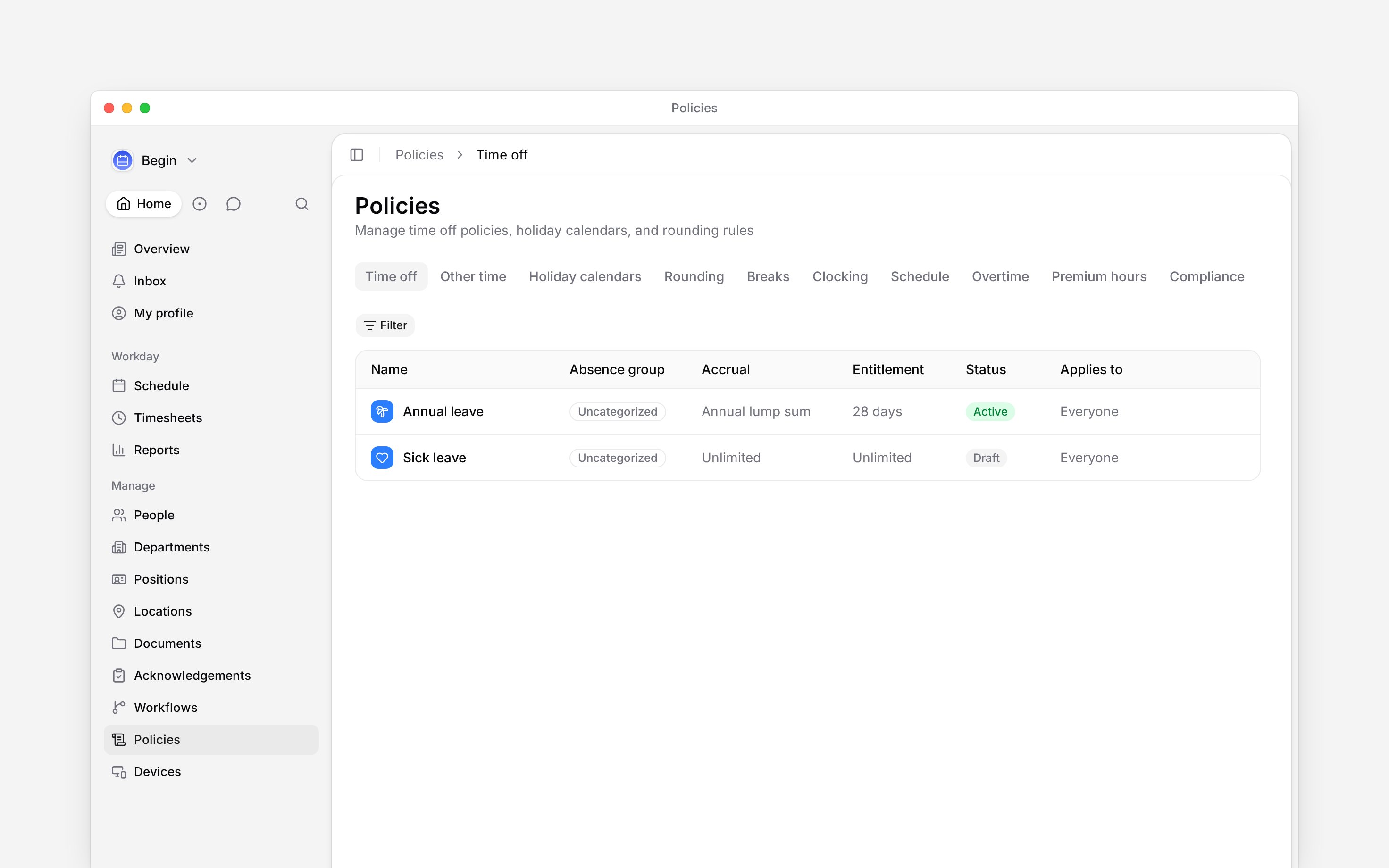
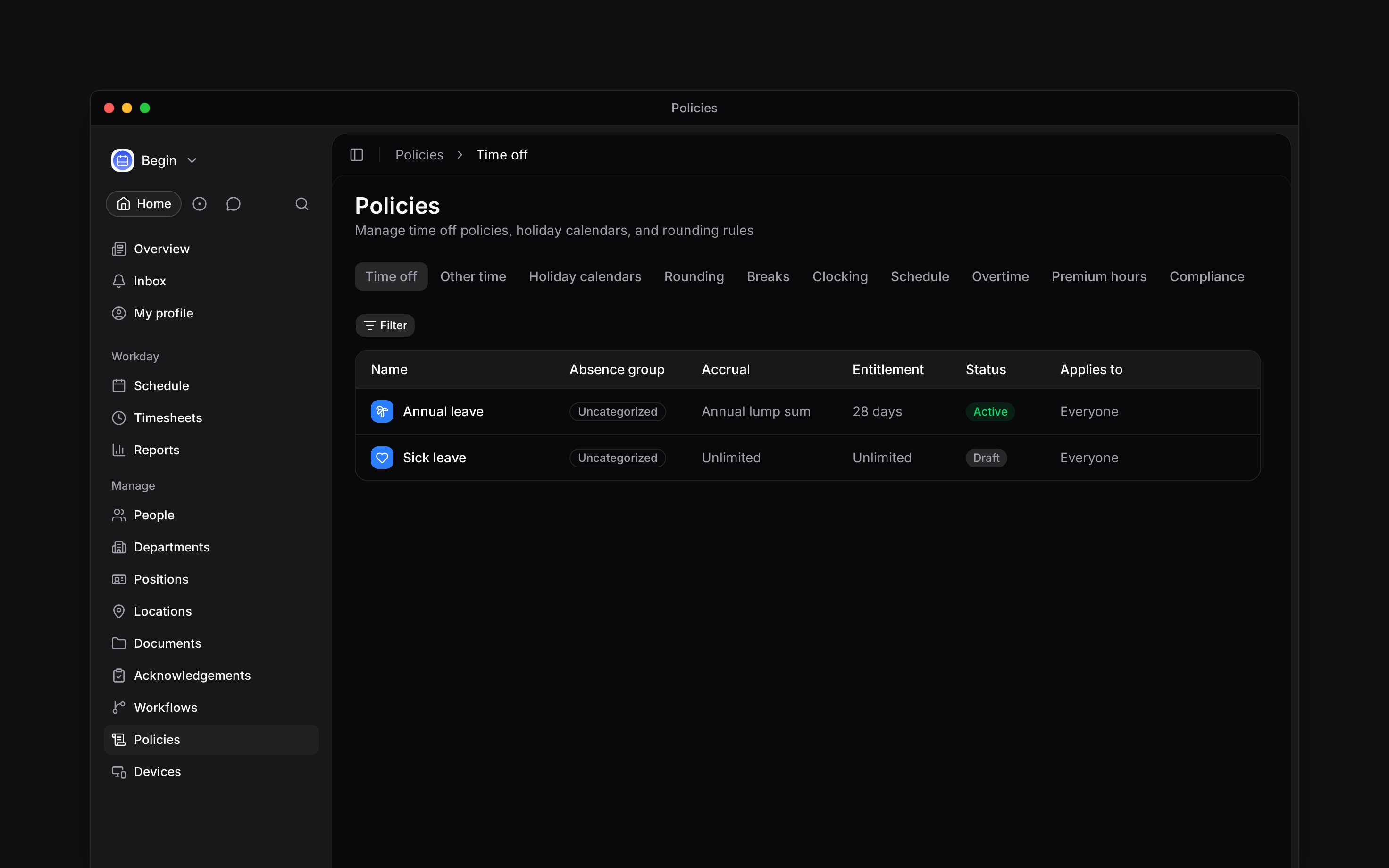
Go to Policies → Time off, open Add, then choose Time off policy.
2
Name the leave
Set the name, leave type, unit and whether the time off is paid. Show the leave type to
colleagues is off by default: colleagues see only that the person is away.
3
Set the entitlement
Choose the accrual method and amount. For an annual lump sum, choose when it is granted and
whether it rounds to half or whole days. Set Apply from year only if earlier years should
carry no entitlement.
4
Set what spends it
Choose whether weekends and public holidays are excluded. Enable Allow carryover and set its
limit if unused balance may enter the next year. Enable Allow overbooking only if requests
may take the balance below zero. Under Request rules, set the Minimum and Maximum
request length and a Requirement of Not used, Optional or Required.
5
Decide approval
Set Require approval under Approval. This is separate from the entitlement amount; an
unlimited allowance does not itself decide who approves a request.
6
Target and activate it
Choose Applies to, set Status to Active,
then save.
Keep balances accurate
The policy detail shows balances for the people it reaches. Use Adjust balance when you need to bring in an opening balance or make a correction: enter the balance the person should have, and record the reason. The adjustment changes that person’s total without changing the entitlement for everyone else. If Exclude public holidays is on, Begin resolves holidays from the person’s work country. Only holidays marked Paid holiday in the calendar are excluded; an unpaid holiday still spends the balance. The current time-off form has no calendar picker. Request-length limits still count calendar days: Monday to Sunday is seven days even when the weekend does not reduce the balance. Before your team starts booking, check one person’s Time off profile tab. Confirm the entitlement and opening balance, then open a request for a known date range and review which days would spend it. A weekend excluded from the balance is still part of the requested date range. You cannot delete a policy with time off booked against it: archive it instead. Archived policies stop accepting requests but keep balances and history. Deleting a policy removes its members’ balance records.Changing entitlement settings can recalculate balances for everyone the policy reaches. Check the
audience before saving a change to an active policy.
Next
Holidays and calendars
Define the public holidays a leave balance may exclude.
Time off on the schedule
Book leave and read the balance card it produces.
Still need help?
Contact support
Email the Begin team and we’ll get back to you.
Ask Begin AI
Open the AI assistant and get instant answers based on these docs.