


 A premium-hours policy defines the evening and night windows used in calculated hour columns. It classifies time only. It does not set pay rates or multipliers.
Set the time windows
Set both the start and end for each window you use. A window may pass midnight, such as 22:00 to 06:00, but the evening and night windows cannot overlap or have the same start and end. Leave a window unset when that bucket should not be counted at all; the table then shows Not counted and the report column stays at zero. With no matching premium policy, Begin records no evening or night hours.Weekend hours have their own calculated column. They are not switched on or off by a premium-hours
policy.
Create the policy
1
Start it
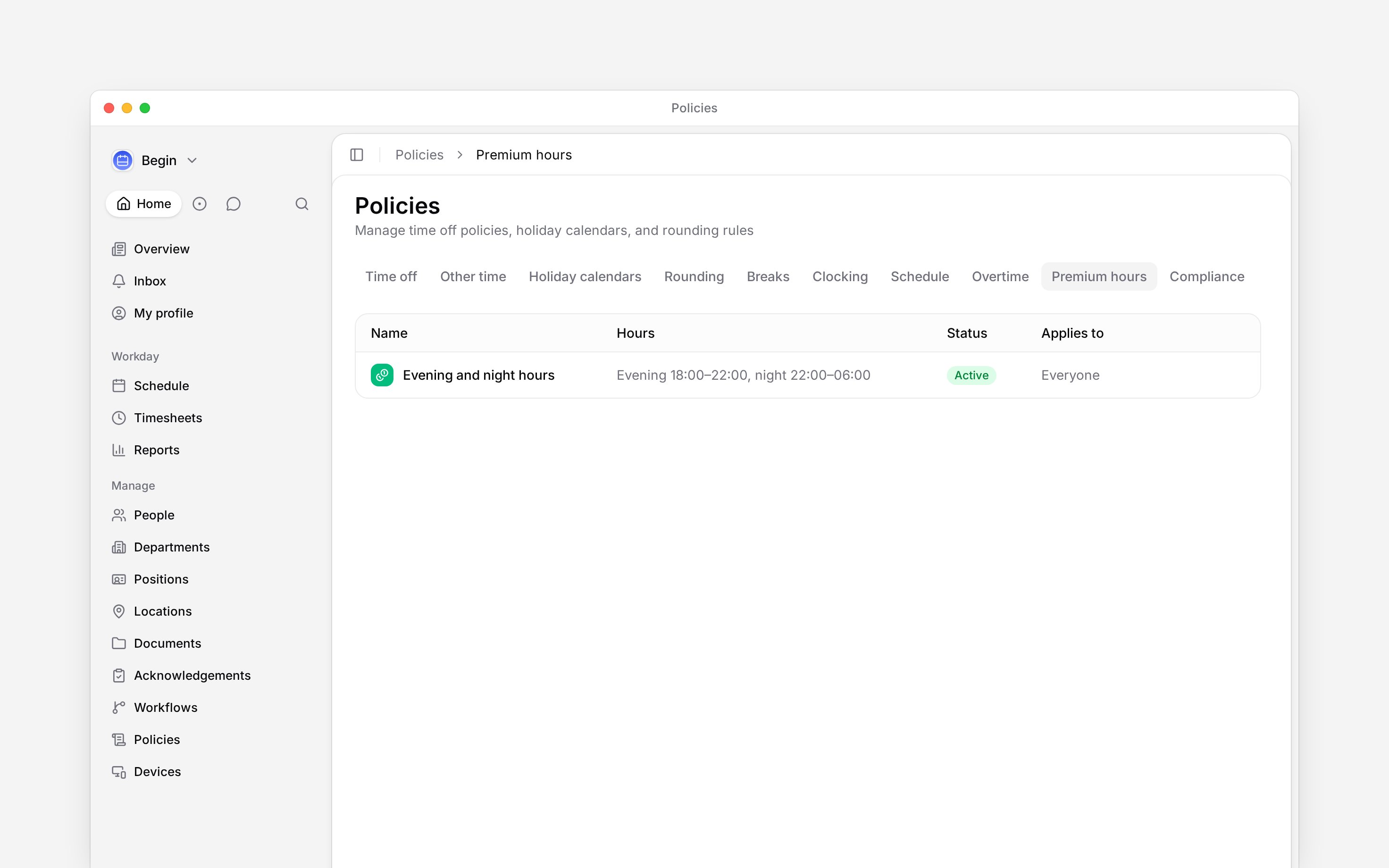
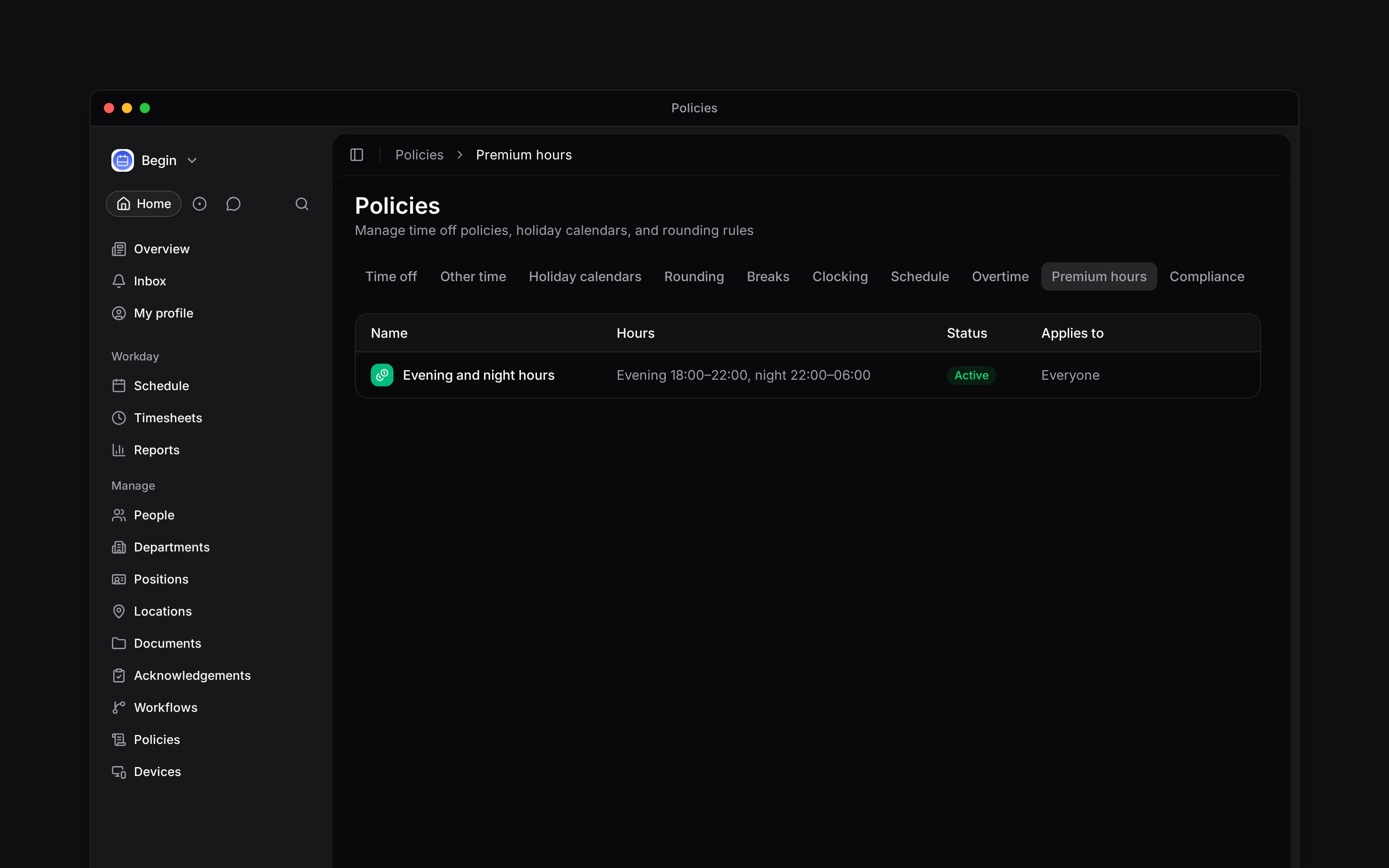
Go to Policies → Premium hours, open Add, then choose Premium hours policy.
2
Set evening hours
Enter both the evening start and end, or leave the window unset so evening hours are not
counted.
3
Set night hours
Enter both the night start and end. Check that it does not overlap the evening window.
4
Target and activate it
Choose Applies to, set Status to Active,
then save.
Read the result
Begin splits worked time across the matching evening and night windows. These buckets appear in reports beside other calculated hour types. For example, with night hours set to 22:00–06:00, an uninterrupted 19:00–03:00 shift contains five night hours. Review any unpaid break inside that window when checking the result. Use Policy tester to check the matching policy, then inspect the Night column for the same person and reporting period. Do not infer an overtime amount from the number of night hours. Once a time entry is approved, its overtime and premium settings are frozen; a later policy change does not restate it.Next
Hour columns
Find evening, night, weekend and holiday buckets.
Overtime
Set the separate rule for hours above the norm.
Still need help?
Contact support
Email the Begin team and we’ll get back to you.
Ask Begin AI
Open the AI assistant and get instant answers based on these docs.