


 Use Applies to to decide who a policy reaches. You can start with Everyone, then add a more specific policy for selected people, positions or departments when their rules differ.
Choose the audience
1
Open the policy
Go to Policies, choose its tab, then add a policy or open an existing row and select
Edit.
2
Set Applies to
Choose Everyone for a workspace-wide rule, or the specific option (its wording varies by
tab) and select at least one target.
3
Activate it
Set Status to Active, then save. Draft and archived policies do not take effect.
Preview the result
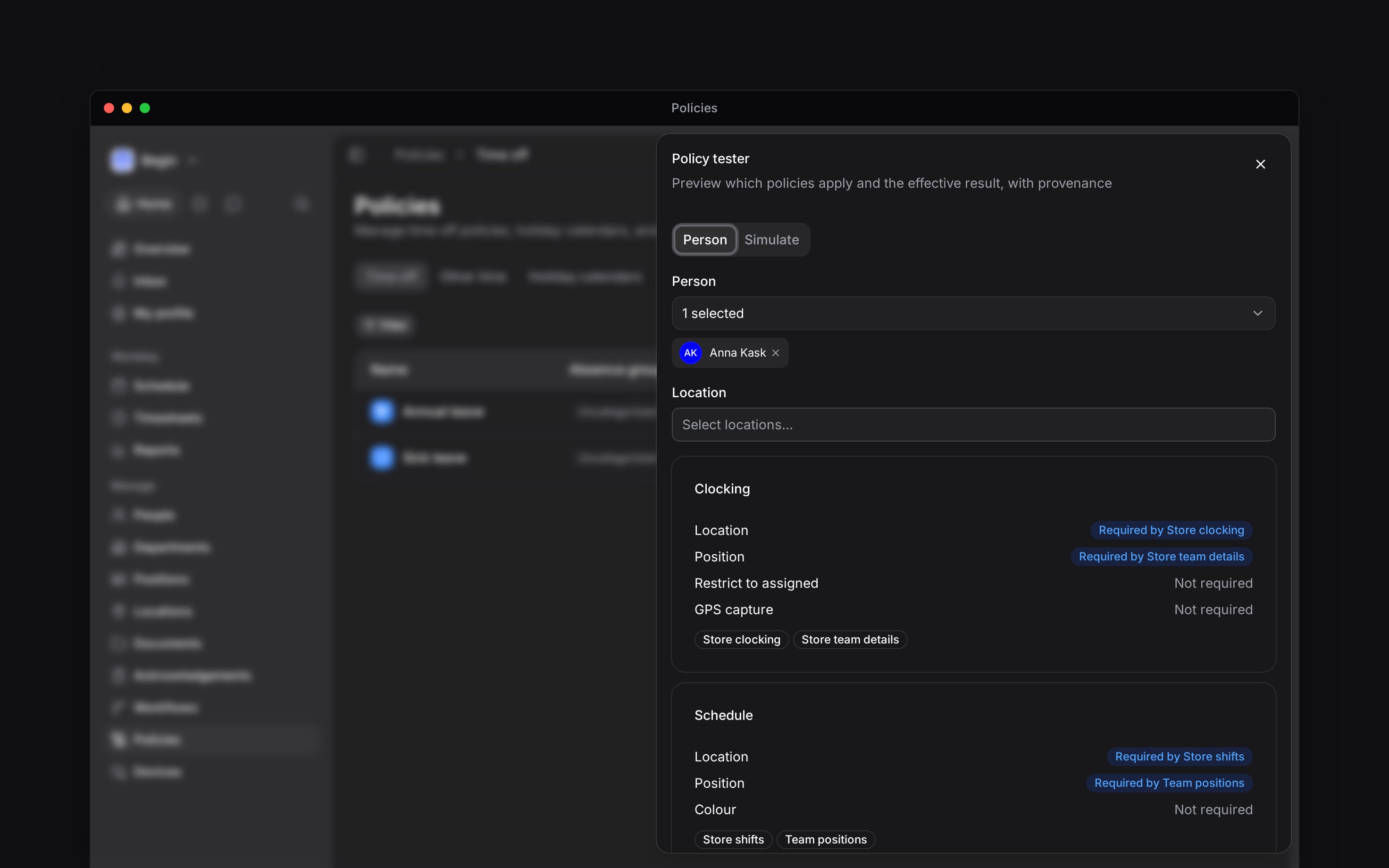
Open Policy options (the three-dot menu beside Add) and choose Policy tester. Pick a person to use their current assignments, or choose Simulate to test a position, department and location without changing anyone. The cards name the policies that apply. Where several rules contribute, the result also names which policy supplied each requirement. Check one person who should receive the rule and one who should not. For example, a schedule policy requiring Position for a department should contribute that requirement for a member of that department. A person outside it may still have the same requirement from a different policy: read the source name rather than checking only the final result. If the expected rule is missing, check its Active status, the person’s current assignments and its targets. For families with location-scoped matching, select the location you want to test. Overtime, premium-hours and compliance rules do not take a location target. Simulate does not represent a real person, so it cannot match a policy targeted directly to that person.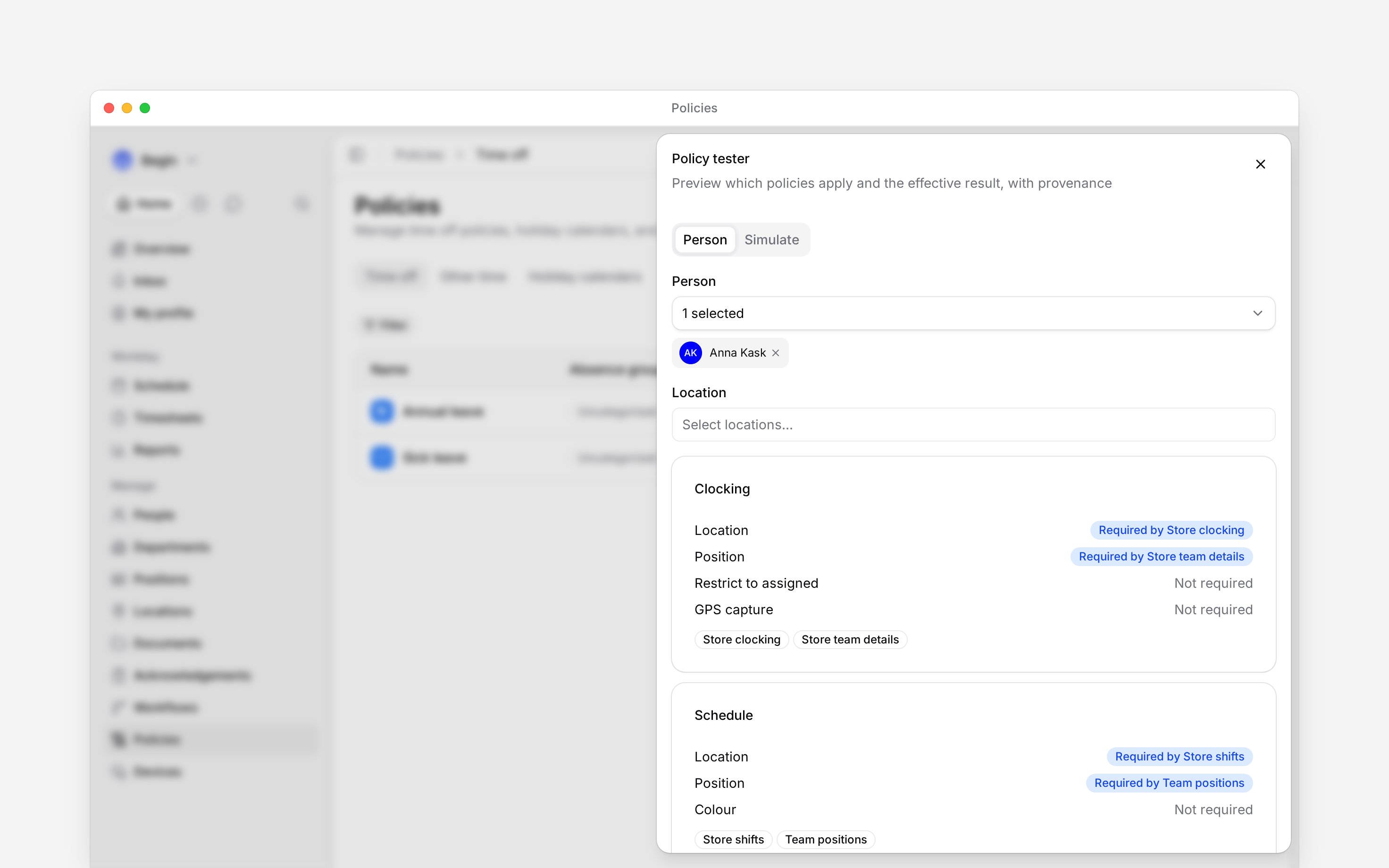
Resolve equal matches
Two equally specific policies in one family may disagree. Where conflict checks are available, Begin marks both rows and names the setting that differs. Change the targets or align the settings so the effective result is unambiguous.Conflict marks appear only when conflict checks are enabled for your workspace and a scan has
completed. If you do not see them, use Policy tester to check the effective result.
Next
Time off and entitlements
Apply leave and balance rules to the right people.
Clocking restrictions
Combine audience and workplace rules for clocking.
Still need help?
Contact support
Email the Begin team and we’ll get back to you.
Ask Begin AI
Open the AI assistant and get instant answers based on these docs.