


 An overtime policy decides when worked hours move into the overtime column. It compares calculated worked time with the person’s norm; it does not set a pay rate.
Choose the basis
Check the person’s employment details and norm before choosing the basis. A policy cannot correct an incorrect workload or employment period. With Daily, a day with 10 calculated worked hours and an 8-hour norm produces 2 overtime hours. A shorter day elsewhere does not cancel that daily excess.
For a Summarized period, set Period length and Period start. For example, a three-month window beginning in January covers January to March before the next window begins in April. Begin evaluates the full period, so a longer day may be balanced by a shorter day before the window ends.
With no overtime policy, Begin measures overtime against each calendar month.
Create the policy
1
Start it
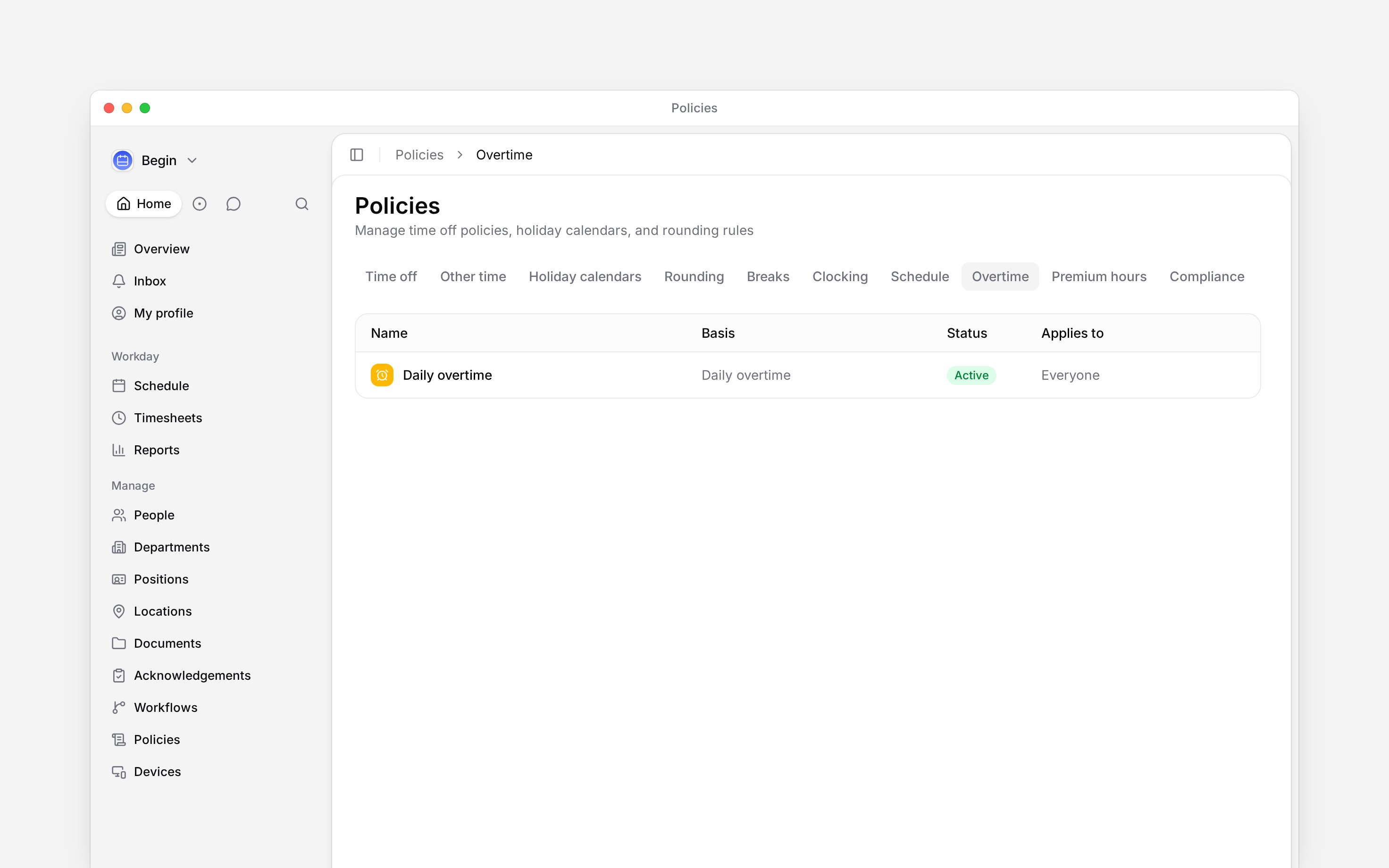
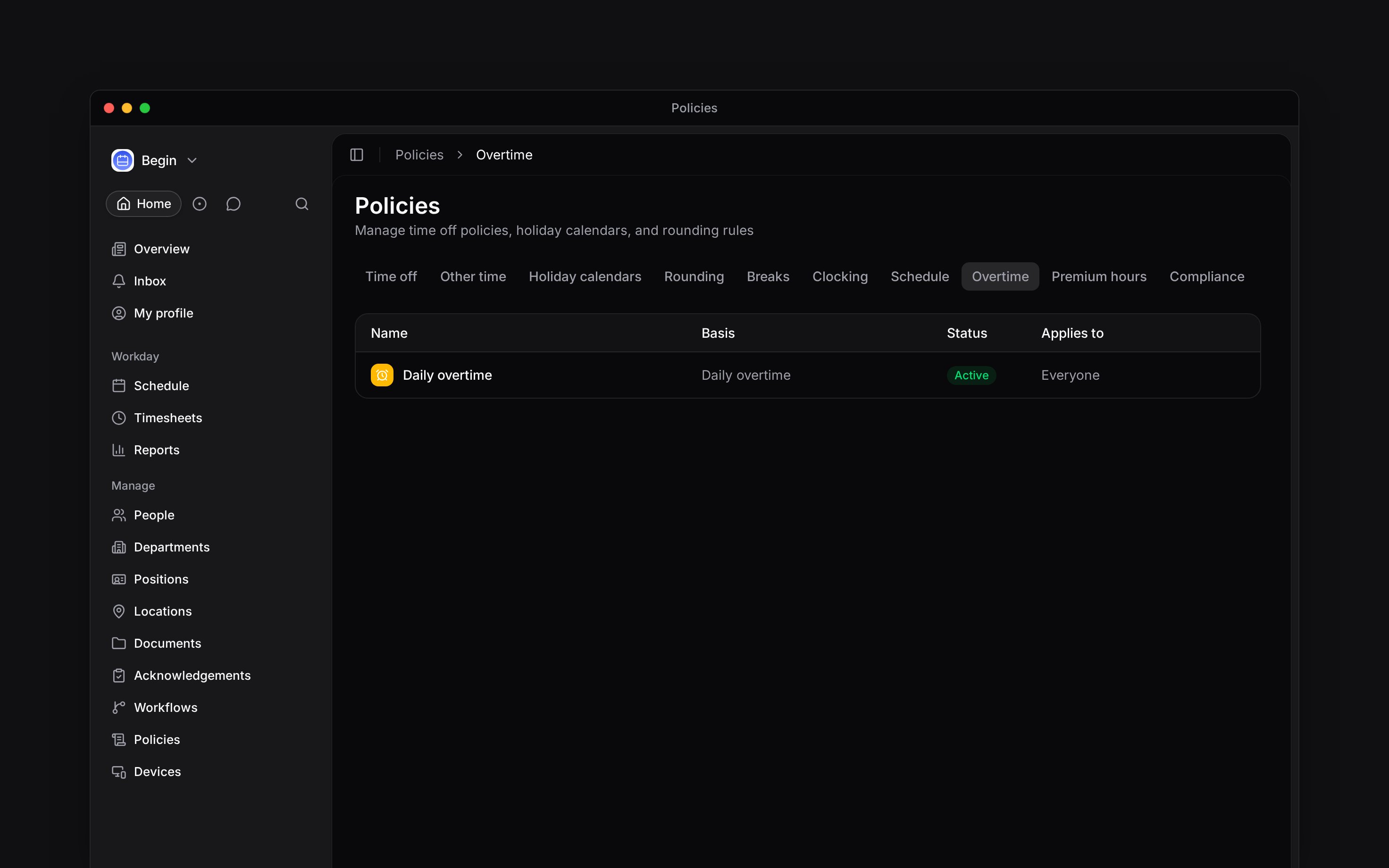
Go to Policies → Overtime, open Add, then choose Overtime policy.
2
Choose the basis
Under Accrual basis, select Daily or Summarized period. For a period, set Period
length and Period start.
3
Set the audience
Use Applies to to choose everyone or selected
people, positions or departments.
4
Activate it
Set Status to Active, then save.
Read the result
Use Policy tester to confirm the person receives the intended overtime policy. Then compare Worked, Norm and Overtime in hour columns, after accounting for breaks and rounding. Reports show overtime as a calculated hour bucket beside worked and norm hours. Check the selected date range before comparing a summarised period, because a partial window does not describe the final period balance. Once a time entry is approved, its overtime and premium settings are frozen; a later policy change does not restate it.Next
Hour columns
Read overtime beside worked and norm hours.
Premium hours
Classify evening and night hours separately.
Still need help?
Contact support
Email the Begin team and we’ll get back to you.
Ask Begin AI
Open the AI assistant and get instant answers based on these docs.