


 A trigger is the event that starts a workflow. Filters and conditions then decide whether the event should reach an action, such as sending a notification or requesting approval.
Match the trigger to its domain
Choose the domain when you create the workflow, then add a trigger from the same part of Begin.
A loop still belongs on its own Loops page. A workflow in the Begin AI domain reacts after that loop finishes; it does not choose what the loop asks, when it runs or who can see it.
Some events appear only when their feature is enabled: document acknowledgements, record dates and Biometric identifier enrolled for terminals. If an expected event is absent, ask an administrator to check that feature’s availability.
Narrow the event
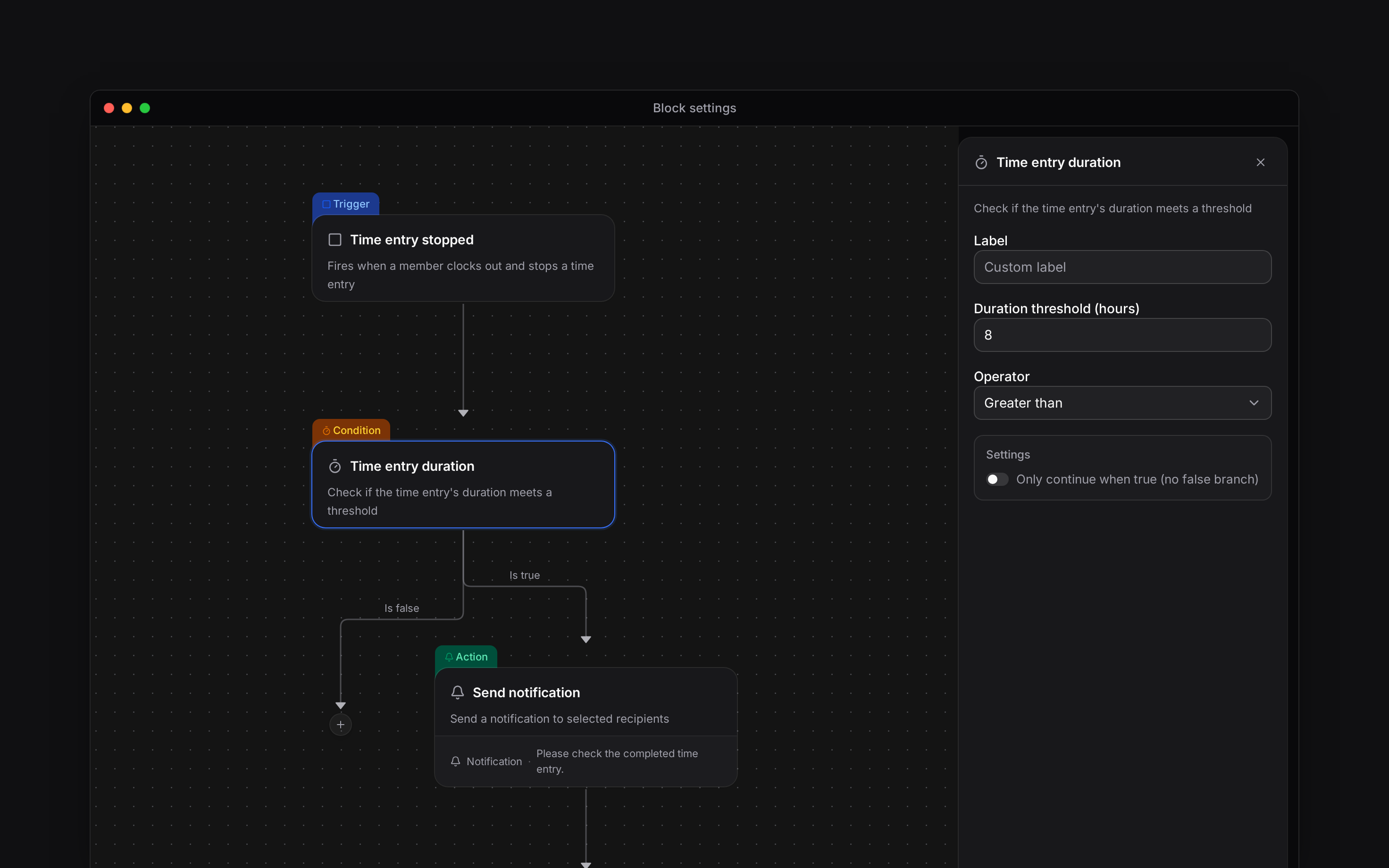
Configure the trigger first. Where the trigger offers filters, Include runs it only for matching people or work, while Exclude runs it for everything else. The available filters can include positions, locations, departments, roles and named members. Add a condition when the event itself is not enough. Conditions can check schedule facts such as shift duration or member position, and timesheet facts such as entry status, duration, clocking location or the difference between scheduled and actual time. Every condition creates a true and false path. Turn on Only continue when true when the false path should stop there. Use a Logic gate when all of several checks must match, or when any one of them is enough.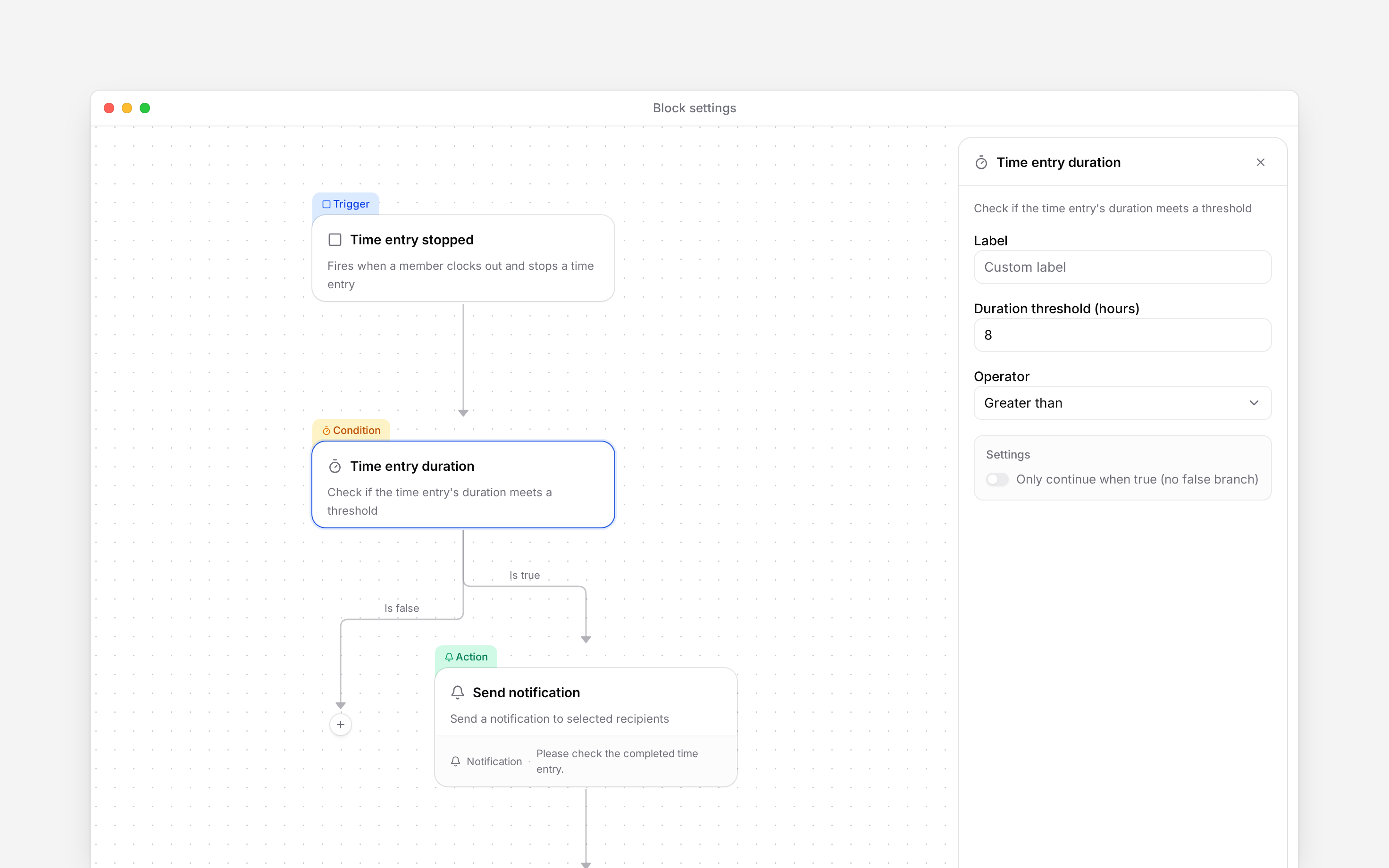
Next
Timesheet workflows
Build a missing clock-in alert or act on a time entry.
Execution history
Check which trigger fired and where a run failed.
Still need help?
Contact support
Email the Begin team and we’ll get back to you.
Ask Begin AI
Open the AI assistant and get instant answers based on these docs.